


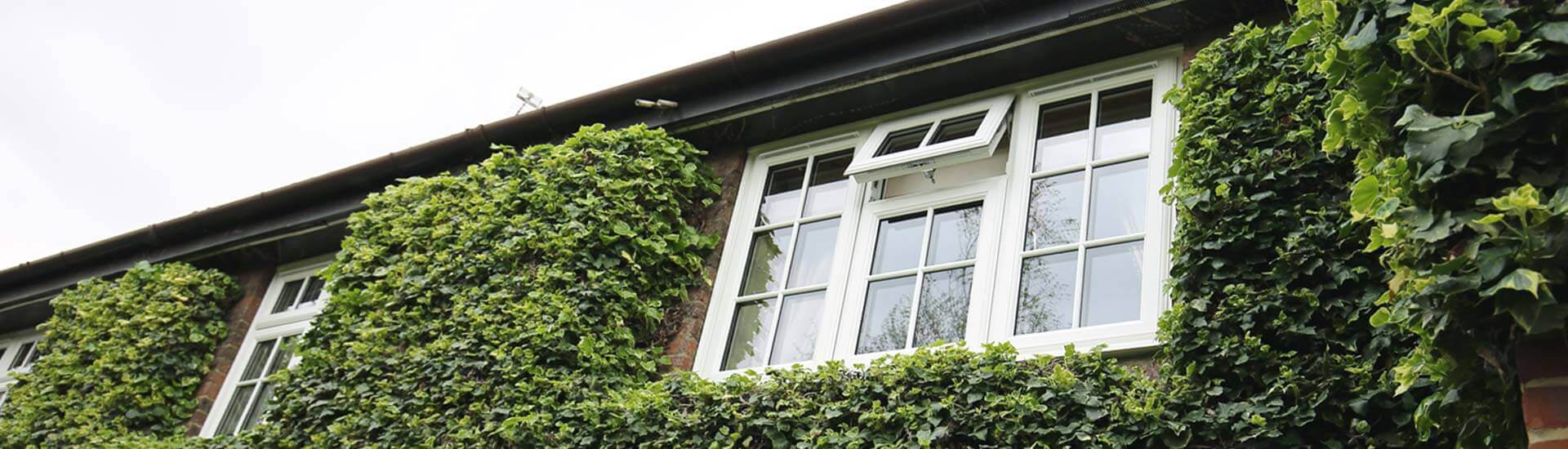

TL;DR: A casement window is hinged at the side or top and swings outward like a door, opened with a handle. It’s the most common window style in UK homes, made in uPVC, timber, or aluminium. Side-hung, top-hung, flush, French, and fixed are the main types. Modern uPVC casements seal tight against the frame, which makes them energy efficient and secure, with low maintenance.
Around 80 million windows in UK homes would benefit from replacement, according to the GGF and British Glass (October 2023). Most of those will be casement windows, the style fitted in the majority of British homes for the best part of a century. You’ll find them in 1930s semis, post-war estates, 1970s housing, and modern new builds. So before you replace yours, ask one question first: do you actually know what type of window you have?
For most people the answer is no, because casements are so standard they’re just “the windows.” But the type sets the price you pay and the energy rating you get. Get either wrong and it costs you. This guide explains what a casement window is, how it opens and seals, the styles available, what the energy ratings mean for your bills, and how to choose the right one for your home.
What Is a Casement Window?
A casement window is hinged to its frame, usually at the side, and swings outward like a door. A handle or crank opens the moving part, called the sash or casement. Close it and the sash presses against the frame, forming a compression seal on all four sides.
It’s the most common window style in UK homes, and the name comes straight from the casement, the part that opens.
Casements are older than sash windows in Britain. They go back to medieval building, when a window was a small opening covered by a hinged frame, sometimes leaded glass and sometimes plain timber shutters. The uPVC casement most homes have today is far more recent, arriving in the 1980s.
British casements open outward as standard. Inward-opening and tilt-and-turn windows are common across mainland Europe, but you’ll rarely find them on a UK home.
How Does a Casement Window Work?
Turn the handle and the sash swings outward on its hinges, often to a full 90 degrees. When you close it, the handle pulls the sash back hard against the frame, compressing a weatherstrip seal around all four edges. That seal is why casements beat sliding windows on energy: no overlapping tracks, just one sash pressed flat to a weatherproof frame.
The handle also drives the multi-point lock. Turn it shut and several bolts throw into the frame at once, securing every side in a single movement.
A few parts do the actual work:
- Sash: the opening frame that holds the glass and swings out when you turn the handle.
- Hinges: mounted at the side for a side-hung casement or the top for a top-hung one, carrying the weight of the sash as it opens.
- Friction stay: the adjustable arm that holds the window open at whatever angle you choose and stops it drifting in a breeze.
- Compression seal: the strip the sash squeezes against when shut, blocking draughts and heat loss on all four sides.
Types of Casement Window
Casement windows come in several configurations. They all share the same hinge-and-seal principle but differ in how and where they open. The side-hung casement is the one most UK homes have. The others, top-hung, French, flush, and fixed, each suit different openings, property styles, and ventilation needs.
Side-Hung Casement
Hinged on the left or right and opening outward, this is the standard UK window, and the uPVC casement windows fitted in most homes are this type. You’ll find it in nearly every housing era, from 1930s semis to last year’s new builds. A left-opening unit is sometimes labelled FCL and a right-opening one FCR on quotes and surveys.
Single and Double Casement
A single casement is one sash in its own frame, the most basic form, often paired with a fixed light beside it. A double casement has two sashes that open from the centre, split by a fixed central mullion, the vertical bar dividing the two openings.
French Casement
A French casement also has two sashes opening from the centre, but with no fixed bar between them. The mullion floats, attached to one sash so it travels with it, which clears the whole opening when both sashes are open. Handy over a kitchen sink or anywhere you want the widest unobstructed gap.
Top-Hung Casement
Hinged at the top and opening outward from the bottom, a top-hung casement (sometimes called an awning window) sheds rain while it’s open. That makes it a sensible pick above a kitchen worktop or in a bathroom, where you want airflow without water running in.
Flush Casement
On a flush casement the sash closes level with the outer frame instead of sitting slightly proud. The result is a flat, clean face that suits period homes and modern minimalist designs alike. uPVC flush casements copy the look of traditional timber without the repainting, which is why they’re popular in conservation-sensitive streets.
Fixed Casement and Mock Sash
A fixed casement doesn’t open at all. It’s used where light and the view matter more than ventilation, often flanked by opening casements on either side. A mock sash (or dummy sash) is a fixed light built to match the profile of the opening casements next to it, keeping a row of windows looking consistent.
Casement Windows in UK Homes: Which Properties Suit Them?
Casement windows are the default replacement choice across UK housing because their outward swing suits almost every property era. They work in nearly every property type, pre-war housing through to today’s new builds. Period homes in conservation areas are the exception, and the rules there are worth knowing before you order.
Standard UK Homes
uPVC casement is the dominant replacement window in Britain. The eras that built most of our housing stock fitted outward-opening casements as standard, so like-for-like replacement is straightforward. That covers 1930s semis, the most common house type in the country, post-war council estates, 1960s to 1980s suburban housing, and modern new builds. Swap an old casement for a new one and the opening and hinges carry over.
uPVC also wins on cost and upkeep against timber, which is why it took over the replacement market through the 1990s and 2000s.
Conservation Areas and Listed Buildings
For most houses, replacing your windows is permitted development and needs no planning application, as long as the new ones are similar in appearance to the originals (Planning Portal, England). Conservation areas change that. The rules depend on your property and your council:
- House in a conservation area, no Article 4: like-for-like replacement is usually permitted development, though councils often resist uPVC where it’s visible from the street.
- House under an Article 4 Direction: a local authority instruction that removes your usual permitted development rights, so formal planning permission is required even for an identical like-for-like swap.
- Flats and listed buildings: consent is always needed, conservation area or not.
If your property sits in a conservation area, check with your council before you commit. Every replacement window must also meet Building Regulations Part L, which sets a maximum whole-window U-value of 1.4 W/m²K or Window Energy Rating band B. A FENSA-registered installer certifies that compliance on completion.
Casement Windows and Energy Efficiency: What the Ratings Mean
Every replacement window sold in the UK is rated for energy efficiency by the British Fenestration Rating Council (BFRC), on a scale from A++ down to E. The rating combines three things: heat loss, solar gain, and air leakage. A higher band means the window loses less heat and costs less to run.
That scale is the one you’ll see on the coloured sticker, the same idea as the label on a fridge. The letter tells you the band. The number after it, like the +13 in A+13, is the net energy figure in kWh per square metre per year. A positive number means the window gains more from the sun than it loses.
Apex windows sit at the upper end:
- Double glazing: A+13. Strong all-round performance and the standard most homeowners go for.
- Triple glazing: A++21. A third pane and an extra sealed cavity, for colder rooms, noisy roads, or anyone chasing the lowest bills.
What does that mean in pounds? The Energy Saving Trust puts the saving at around £140 a year for an entirely single-glazed semi-detached home fitted with A-rated double glazing. If your windows are already double glazed but old, the picture changes. Glazing fitted before 2002 runs about 50% less efficient than today’s, and the GGF reckons an upgrade can save up to £395 a year per household.
The compression seal is part of why casements rate well. Pulling tight on all four sides means less air leakage than a sliding window, and air leakage is one of the three things the BFRC measures. Every Apex installation also comes with a 10-year insurance-backed guarantee.
Want the numbers for your own home? Our instant online calculator gives you a price in under a minute, no sales call.
What Are the Downsides of Casement Windows?
Casement windows have real drawbacks alongside their strengths. None is a dealbreaker for most homes, but each affects where a casement will and won’t work.
The big one is clearance. A casement swings outward, so it needs free space on the other side of the wall. A wide casement over a footpath, a tight side return, or right next to a fence may not open fully. Measure the swing before you choose a casement for a tight spot.
Then there’s the hardware. Moving parts wear, and on a casement that means the hinges, the handle, and the friction stay. Hinges stiffen when grit builds up or the lubrication dries out, and handles wear after years of daily use. The good news with uPVC is that most of this is a repair, not a replacement window: a new stay or handle costs a fraction of a new unit.
Wind catches people out too. Leave a casement open in a gust and a failed friction stay lets it slam back against the frame, cracking the seal or the sash. A yearly check of the stays prevents it.
A couple more, briefly:
- Air conditioning units: an outward-opening casement won’t take a through-the-wall AC unit the way a sliding sash window will. If that’s on your wishlist, factor it in early.
- Very large openings: a single huge casement overloads its hinges, so big spans use a fixed central pane flanked by smaller opening casements instead.
Casement Windows vs Sash Windows: Which Should You Choose?
Casement and sash windows are the two most common styles in UK homes, and the choice comes down to your property and any heritage rules. For most homes built after 1930, a casement is the natural fit. For Georgian, Victorian, and Edwardian properties, sash windows often suit the building better, and may be required in a conservation area.
The difference is how they move: a casement swings on a hinge, a sash slides one pane past the other. Casements usually cost less to fit and seal a little tighter against draughts, while sash windows win on period character. If you want that heritage look with modern performance, a flush sash window gives you the slim sightlines without the draughts of an original.
If you’ve got an ordinary house built any time after the 1930s, a casement is almost always the right call. Only really start with sash if your home is a period property or your street is in a conservation area.
The Bottom Line on Casement Windows
Casement windows suit almost every UK home built since the 1930s, come in styles to fit a period cottage or a new build, and modern A+13 units cut real money off your heating bills. Which type depends on the job. Side-hung suits a standard home. Go flush if you want a heritage or minimalist face, or French where you need the widest opening.
Quickest way to a real number is the instant online calculator: your price in under a minute, no sales call. Prefer to talk? Speak to our team.
Frequently Asked Questions
What is the downside of casement windows?
They need clear space outside to swing open, so a wide casement over a path or close to a fence may not open fully. The other weak point is hardware: hinges, handles, and friction stays wear over time. With uPVC, those are usually a repair, not a replacement.
What’s the difference between a casement window and a regular window?
In the UK there isn’t much of one, because casements are the regular window in most homes. The comparison people usually mean is casement versus sash. A casement opens outward on a side hinge like a door, while a sash slides vertically, one pane passing the other.
What is the purpose of a casement window?
A casement gives you ventilation and a tight seal when shut. Opening to a full 90 degrees pulls plenty of air through, and closing it presses the sash against a compression seal on all four sides to keep heat in and draughts out. The multi-point lock built into the frame also makes casements one of the more secure window types.
What does a casement window look like?
Most UK windows are casements, so you almost certainly picture one already: a window with a handle on the inside that swings outward. Side-hung versions open left or right, top-hung ones open from the bottom. A flush casement sits level with the frame; a standard one sits slightly proud.
What are common problems with casement windows?
The usual ones are stiff hinges from grit or dried-out lubrication, a worn handle mechanism, failed weatherstripping that lets in draughts, and misting between the panes, which points to a blown sealed unit. Most are fixable without a new window. A yearly squirt of lubricant on the hinges and stays heads off the majority of hardware faults.
Do I need planning permission to replace casement windows?
For most houses in England, no. Replacing windows is permitted development as long as the new ones look similar to the old, but an Article 4 Direction in a conservation area removes that right, so you’d need permission even for a like-for-like swap. Flats and listed buildings always need consent. Check with your council if you’re unsure.
What is the difference between a casement and a flush casement window?
A standard casement sits slightly proud of the frame when shut, with the sash overlapping it. A flush casement closes level with the frame for a flat, clean face. They perform much the same on energy and security; the flush version just looks neater, which is why it’s popular on period and minimalist homes.