


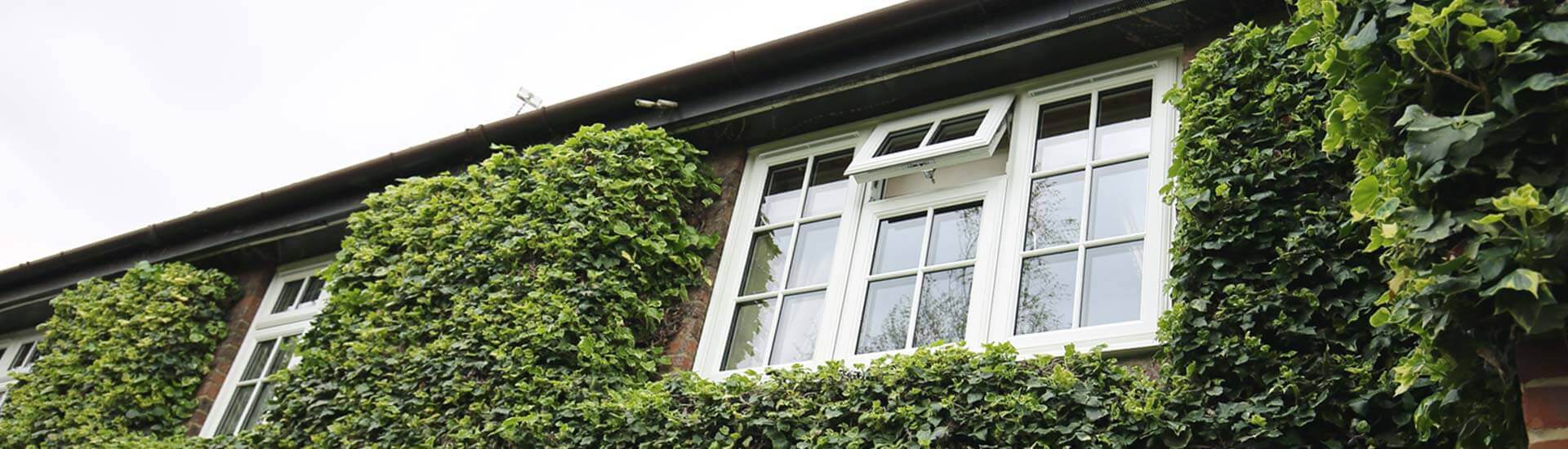

TL;DR: Casement window replacement is worth it once draughts, stiff cranks, condensation between panes, or rising bills show the seals and frame have failed, typically after 20 to 35 years. Replacing the full uPVC frame, not just the glass, restores airtightness and security. This guide covers the signs, the process, current costs, and how Apex prices it in under 10 seconds with no hidden extras.
Struggling to crank your window shut? Feeling a chill by the frame even when it’s closed? These aren’t cosmetic niggles. They usually mean the seals, hinges, or frame have reached the end of their working life.
“Replacing” a casement window means the whole frame, not just the glass. Below: when it’s worth doing, what the process involves, what it costs in 2026, and how to get a price without a sales call.
Full Window Replacement vs Just Replacing the Glass
Casement window replacement means fitting a new uPVC frame, sash, and glazing unit as a complete assembly, not simply swapping the glass pane inside an ageing frame. Replacing the glass alone can fix a failed seal, the point where the gas-filled gap between panes has lost its airtight seal, causing the fogging or condensation you sometimes see trapped between panes, cheaply and quickly. But it does nothing for worn hinges, a warped frame, or a crank mechanism on its way out, and those problems tend to resurface within a few years.
A pane-only fix makes sense in one situation: a young frame, an isolated failed seal, and hardware that still works properly. Outside of that, it’s usually a false economy. A frame over 20 years old, several symptoms showing up together, or hardware that’s already stiff or loose all point toward full replacement instead.
We fit our casement windows as a complete frame, sash, and glazing replacement as standard, because patching one symptom usually just leaves the rest to fail later.
Signs You Need a Casement Window Replacement
A casement window typically needs replacing, rather than repairing, when two or more of these show up together: it’s hard to crank open or won’t latch shut, there’s condensation trapped between the panes, you can feel a draught with the window fully closed, or your heating costs have crept up without an obvious cause. Any one on its own might be a simple fix. Several together usually mean the frame and seals have reached the end of their working life.
- A stiff or seized crank mechanism. The gears inside the handle wear down over time.
- Condensation trapped between the panes. The sealed unit has failed and the insulating gas fill has escaped, so the glazing needs replacing, not just cleaning.
- A draught you can feel even with the window shut, caused by weatherstripping that’s shrunk or perished with age.
- Heating bills creeping up for no obvious reason. A failing seal or warped frame lets heat escape steadily, often before the problem is visible.
- Gaps, warping, or discolouration in the frame, usually from years of sun and weather exposure. A warped frame also stops the sash from closing squarely.
A professional inspection is the only reliable way to tell whether it’s the hardware, the seal, or the frame that’s failed, since these symptoms can look similar from the outside. If you’re seeing two or more, it’s worth getting a proper look rather than guessing. Speak to our team, and we’ll tell you straight.
Is It Worth Replacing 20-Year-Old Casement Windows?
Yes, in most cases. Double-glazed windows typically last 20 to 35 years when they were good quality and properly installed, so a 20-year-old casement window is approaching, or already past, the point where seals and hardware start failing.
Replacing pre-2002 double glazing specifically can roughly halve heat loss through the window, cutting it from around 44% to 22%, and save the average UK household £467 a year, according to the Glass and Glazing Federation and British Glass in a report published in October 2023.
That 20 to 35 year range is typical, not a guarantee. A window showing several of the signs above at 15 years old is still a legitimate case for replacement. A well-maintained 18-year-old window with no symptoms might have a few years left in it. Age on its own isn’t the test; what the window is doing matters more.
A new Apex Windows install also comes with a 10-year insurance-backed guarantee, so you’re covered against the next problem for a decade.
How Is a Casement Window Replaced?
A professional casement window replacement involves removing the old frame down to the brick or timber opening, checking and preparing that opening, fitting the new uPVC frame square and plumb, sealing and insulating the perimeter gap, then fitting the sash, glazing, and hardware before testing operation and weatherproofing.
- Remove the old frame down to the brick or timber opening.
- Check and prepare the opening, correcting any damage or unevenness found underneath.
- Fit the new uPVC frame square and plumb, so the sash closes properly for years rather than months.
- Seal and insulate the perimeter gap between the frame and the wall.
- Fit the sash, glazing, and hardware, then test operation and weatherproofing before finishing.
A single window is usually done within a few hours. A full-house re-glaze runs from one day to a few, depending on how many windows are involved.
For a UK uPVC installation, the work also has to meet Building Regulations. Current English standards set a limiting U-value of 1.4 W/m²K for replacement windows, the measure of how much heat escapes through the window, under Approved Document L, Volume 1: Dwellings (2021 edition incorporating 2023 amendments).
A FENSA-registered installer certifies the work meets that standard on your behalf, without you needing to arrange a separate Building Control inspection. FENSA issued its 15-millionth certificate at the start of its 20th anniversary year in 2022, two decades after the scheme was set up to professionalise the industry and protect homeowners.
Apex has traded since 1989 and has held FENSA registration for the scheme’s full history.
Common Problems and Downsides of Casement Windows
Ageing casement windows tend to develop the same faults: crank mechanisms that stiffen or stop working, weatherstripping that degrades and lets in draughts, and locks or hinges that no longer engage properly. The style itself has one built-in downside too: it swings outward, so it needs clear space outside the opening and isn’t ideal right next to a path or patio seating area.
Security is the downside worth taking seriously. Ageing single-point or worn locks on old casement windows are meaningfully easier to force than modern standards allow. Homes meeting Secured by Design standards saw 53% less burglary than homes without it, rising to 65% lower for new-builds and 77% lower for attempted burglary specifically, according to Secured by Design’s 2023 Homes guide, which draws on a College of Policing evidence review.
Modern uPVC casement windows fix that weak point directly. Every Apex window comes with a multi-point shoot-bolt locking system as standard, engaging the frame at several points rather than one, and glazing options include toughened safety glass where extra impact resistance matters.
Are Casement Windows Outdated?
No, casement windows are not outdated. They remain one of the most widely fitted window styles in UK homes because the outward-swing design gives a fuller opening for airflow and an unobstructed view compared with sliding styles. Modern uPVC casement windows now come in slimline sightlines and a wide range of finishes that suit both period and contemporary properties.
The specification has changed more than the style. Today’s casement windows use A+13 rated (double glazed) glass, meeting the top energy efficiency band for standard double glazing, or A++21 rated (triple glazed) glass for even better performance. Internal glazing adds security by keeping the beading on the inside, where it can’t be tampered with from outside, and a LINIAR profile, a uPVC frame system built for tighter tolerances and better long-term performance than older generic profiles, replaces what older casement windows were built on.
If you’d rather explore a different look, flush sash, Georgian bar, and sliding sash styles are all available across our range of uPVC windows. The style you pick is largely down to preference; the performance improvements apply across the board.
What Does Casement Window Replacement Cost?
Casement window replacement cost in the UK depends on the size and shape of each opening, whether you’re going double or triple glazed, and how many windows you’re doing at once. There’s no single figure that applies to every home; the only way to get an accurate price is a like-for-like quote.
Three double-glazed casement windows fitted through Apex start at £2,493, VAT and fitting included. Three triple-glazed windows, with the better A++21 energy rating, start at £2,871.
You can check exactly where you stand with Apex’s instant online calculator, which gives you a real price in under 10 seconds.
Conclusion
If two or more of the signs covered here show up on a window over 20 years old, full-frame replacement is very likely worth it, both for comfort day-to-day and for the savings the numbers above point to. A pane-only fix has its place, but only when the frame and hardware are genuinely still sound.
Apex fits uPVC casement windows only, backed by FENSA registration and a 10-year insurance-backed guarantee, and shows pricing upfront before you commit to anything. Get an instant quote and see where you stand, or get in touch if you’d rather talk it through first.
Frequently Asked Questions
What are common problems with casement windows?
The most common problems are worn crank mechanisms, degraded weatherstripping that lets in draughts, and locks or hinges that no longer engage properly. On uPVC casement windows over about 15 to 20 years old, these usually appear together rather than in isolation.
Is it worth replacing 20-year-old windows?
Yes, in most cases. Double-glazed windows typically last 20 to 35 years when properly installed, so a 20-year-old window is at or near the point where seals and hardware start to fail, and replacing older double glazing can cut heat loss through the window roughly in half.
What are the downsides of casement windows?
The main practical downside is that they swing outward, so they need clear space outside the opening, which matters near a path or patio. On older units, worn locks can also be a genuine security weak point. Modern uPVC casement windows address this with multi-point shoot-bolt locking as standard.
Are casement windows outdated?
No. They remain one of the most fitted window styles in the UK because of the airflow and unobstructed view the outward-swing design gives. The specification has moved on more than the style: today’s uPVC casement windows use higher energy ratings, internal glazing, and stronger locking as standard.
Do I need Building Regulations approval to replace a casement window?
Not directly. Since 2002, replacement glazing has fallen under Building Regulations, but a FENSA-registered installer can self-certify the work on your behalf, meeting the current limiting U-value standard without you needing to arrange a separate Building Control inspection.
How long does casement window replacement take?
A single window is typically fitted within a few hours. A full-house re-glaze usually takes one to a few days depending on the number of windows, though the only way to get an exact timeframe is a site survey, since access and frame condition both affect it.