


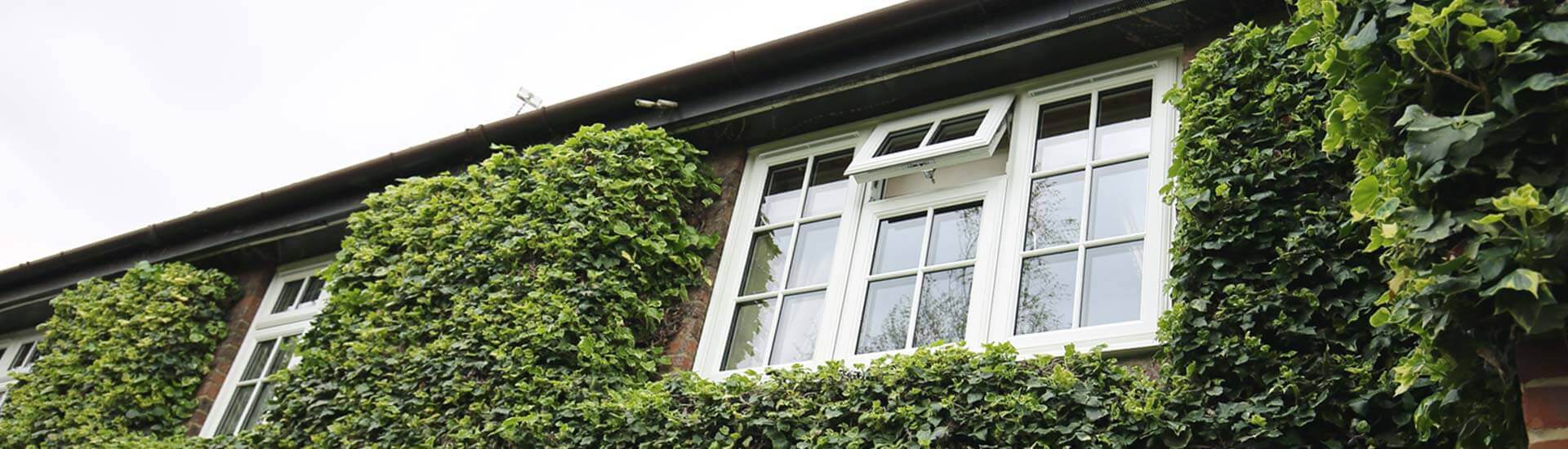

Fascia and soffit are not words that you encounter in your everyday life, but they are an extremely important part of your home’s exterior. Read on to understand just what exactly fascia and soffit are and how they protect your home.
Fascia and Soffit Explained
Fascia and soffit are two sides of the same coin. Soffit is the exposed siding that is installed on the overhang of your roof. It’s not visible unless you’re looking directly upwards.
Fascia is the single board of siding that is installed right above your fascia. It is visible from the street and such plays into your home’s curb appeal.
Both soffit and fascia are made out of siding boards, which means that there is a range of materials that you can choose from. Vinyl, wood, and metal options all exist, with varying levels of durability, price, and different appearances to choose from.
What Does Soffit Do?
Soffit protects the interior of your house from pest infestations, moisture, and other environmental threats. Additionally, soffit is where ventilation is installed, which provides airflow to the space between your attic and roof. Without proper ventilation, that space can suffer from high humidity, which can cause mold growth and structural damage.
Another added benefit of soffit ventilation is that it can help keep your home cool during the hot summer months. Blocked ventilation can allow heat to stay trapped in your attic and the upper floors of your home.
You’ll usually be able to tell what condition your soffit is in by looking at it. Since it is installed horizontally, any sort of damage or rot will cause the surface to deform and hang downwards.
What Does Fascia Do?
Fascia works to hold up the lower edge of your roof. As a single board of siding, it provides support to the last edge of shingles. It’s also the board that your rain gutters and downspouts will be attached to.
Damaged or weak fascia can cause your gutters to separate from your home, leading to leaks and improper drainage in your yard. This is a serious concern, as water that drains too close to the side of your home can cause foundation damage. Further, any damage to your fascia will be visible from the street, which can make your home look worn down.
It can be harder to determine if your fascia has been damaged. Usually, you’ll have to get up on a ladder and inspect your gutters and fascia board up close to see its condition.
Repair Damaged Sections Straight Away
Leaving damaged fascia and soffit sitting on the exterior of your home for a long time can cost you more in the long run, as they can cause interior damage to your home. If you’ve noticed that your soffit and fascia are looking a little worn, feel free to contact us! Our team of experts can help you get your home’s exterior looking fresh again in no time.